The Technical Side of Soil
Regenerative Concepts - Touching on the Rhizophagy cycle
The Rhizophagy cycle works a lot like calling a pizza delivery driver when you're hungry. When a plant needs specific nutrients, it signals microbes in the soil - almost like placing an order for exactly what it's craving. Those microbes go out into the soil, gather the nutrients, and "deliver" them back to the plants root system. In return, the plant "tips" the microbes with carbohydrates and sugars produced through photosynthesis. This exchange mirrors how you tip a pizza delivery driver with cash after they bring your food. Both systems rely on communication, delivery, and reward - creating a mutually beneficial relationship that keeps everything running efficiently. See Dr. James White from Rutgers University for more info on the Rhizophagy cycle.

Benefits of the Rhizophagy cycle
Microbial Endophytes

- Improve plant stress tolerance
- Suppress plant pathogenic fungi
- Modulate root development
- Improve nutrient absorption
- Alter chemical constituent of plants
Rhizophagy cycle microbes modulate development of seedlings
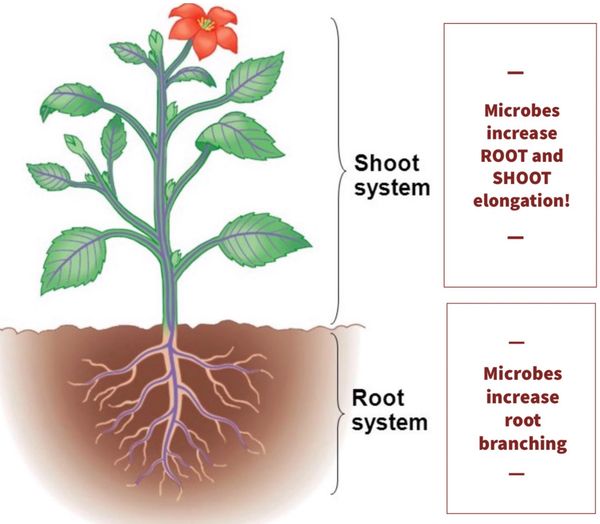
- Microbes trigger the gravitropic response in roots
- Microbes trigger root hair elongation
- Microbes increase root branching
- Microbes increase root and shoot elongation
Microbe colonies in soil

The microbe colonies in the ground are as equally important to the ones in our gut. Healthy soil helps create healthy people and healthy animals.
Root hairs and the Rhizophagy cycle

This is a great visual on how the symbiotic relationship between plants and microbes works. Photo courtesy of Dr. James White, Rutgers University.
Cation Exchange Capacity and soil
Why the Cation Exchange Capacity (CEC) such an important part of the soil?
Cation exchange capacity (CEC) is the soil's ability to hold and exchange positively charged nutrients like calcium, magnesium, and potassium (to name a few), making it a foundational driver of soil fertility. A higher CEC means the soil can store more of these essential nutrients instead of letting them leach away with water as well as down into the soil. This creates a more consistent nutrient supply for plants, reducing stress and improving overall and resilience. Soils with high CEC also tend to have more organic matter and clay, which support stronger microbial activity and better soil structure. That improved structure enhances water retention, aeration, and root development - all key components of a healthy soil ecosystem. Ultimately, a higher CEC number matters because it reflects a soil that can help feed plants efficiently, support biology, and sustain long-term productivity.
A higher CEC creates the opportunity, but microbes are the workforce that actually feed the plant through the Rhizophagy cycle.